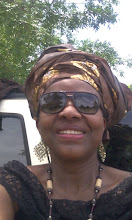
When I read books or hear voices over the airwaves, my imagination, I suppose, always kicks in and paints a picture of the characters in the books or the faces behind the voices. Sometimes, the pictures are so off that I have to laugh at myself or at my imagination when I finally see a real picture or actually get to see the person in real life.
I remember years ago, when I would listen to the radio with my young son as we drove around running errands. Like clockwork, the voice of this teacher will come over the airwaves, authoritative,strong and confident as he taught and advised and encouraged his listeners. In my mind's eye, my imagination created a picture of big athletic figure with black hair, delivering the message. Then one day, I came across a book authored by this teacher and while looking through it, saw a picture of the author. I had to laugh at myself at how wrong my imagination was. There was this fatherly face with a big smile looking up from the page.
During childhood days, most of the books we read apart from the Bible and Bible stories were the typical children's classics, and the fairy tales, and a few vernacular books.
Shakespeare,s plays and some children's poetry books, were also available, and apart from the vernacular books, all the others were usually based on cultures and backgrounds from far away lands. It was a tough game trying to imagine the scenes and characters in those books, and only the pictures and illustrations in the books provided material for the imagination to work with. For the Bible stories, many children, including myself, actually thought that the towns and cities and everybody mentioned were not in this world. Then I found out that Jerusalem was and is actually in this world. Pleasant surprise! Still planning to go see for myself one of these days.
In this day and age, things have changed so much and one can see every part of the world on television and even communicate by telephone or the Internet. What an advancement.
For some people, mostly children, especially in the developing countries, the world outside their environment, is still viewed mostly through the imagination.
Chinua Achebe's book, "Things Fall Apart", with a story line based on everyday village life experiences, was such a spectacular eye opener for children of that generation. To actually have what one was reading play out in the lives of people around, was such a refreshing experience. Other writers took the cue and came up with their own books. Writers like Flora Nwapa (Efuru), Chukwuemeka Ike, Cyprian Ekwensi, (then James Ngugi (Weep not Child) and others, provided books with African themes for children and adults to read and enjoy.
For Poetry and Drama, Wole Soyinka, Gabriel Okara and Dr James Ene Henshaw provided their works. Dr Henshaw's " This is our chance" was a hit for secondary schools in those days. I remember losing out on an audition for a part in the play to another student who had a more forceful voice. The jaw-breaking grammar of the main character, Bambulu, in " This is our chance" was thrown around by students for good laughter, and performing those plays highlighted the acting gifts and talents in some students.
Camara Laye's " L'enfant Noir", translated into English, " The African Child" was one of my English Literature textbooks in class one. In it Camara Laye shared the village life experiences of tribal peoples of Guinea. Another English Literature textbook, titled " Our Sister", ( I have forgotten the name of the author, starred a heroine, OluFunke, who helped bring pipe-borne water to her village.
Following the debut of Chinua Achebe's classic "Things Fall Apart" there were plenty of African culture-based books around, including more by him, to add variety to the choice of books available.
Coming to my point in this story, it was refreshing to read names of characters children could pronounce and identify with: everyday names, name of neighbors and relatives.
One character in Chinua Achebe's " Things Fall Apart" stood out in my mind--- Ekwefi-- which I understood meant--- E ji kwa efi?, or E ji kwa ehi?, or E ji kwa evi?, depending on the dialect, a name posing a question---Was a cow brought?
In Igbo culture, a cow was and is still a big deal, as a gift or token. A cow is a symbol of wealth and power. Bringing a cow as a gift to a funeral or marriage celebration is a significant gesture.
Igbo names always have some message attached to them. No name is given just for the sake of naming a child.
The full name for Ekwefi should actually be " E ji kwa efi bia" ---- Did they come with a cow, as part of the dowry? That puts a non monetary value on this daughter.
Other such names include Nwakaego, meaning a child is more valuable than money, then there is Nnuola or Nnuona, meaning --- four hundred ( uncountable pieces of gold), again indicating the high value of a daughter to the Igbo. Akudiola-- ( Future wealth), is another such name.
These names show the high value the Igbo place on their daughters, not just in terms of bride price, but also in their meaningful contributions to society as Umuada and Umuokpu and as wives and mothers also.
Ekwefi's character reflected in "Things Fall Apart", potrayed that strong will, that love and passion for children and family,and the strong desire for respect from society. All good, and pointing to positive self esteem. I have always wondered why Chinua Achebe chose that name for the main female character in his first book.
E ji kwa efi ?
I have always wondered.
Chinwe Enemchukwu
Sorrento, Florida.
4/05/2013.
Ps: Camara Laye was from Guinea, not Senegal, as I originally wrote. My apologies
Friday, April 5, 2013

Monday, March 11, 2013
Akwa Eke Orima
Yesterday, March 10 was Mother's Sunday in Nigeria. Mother's Sunday is usually a big deal for mothers all over, just as Mother's day in May, is a big deal here in the United States. I had shared this for Mother's Day 2010. This is for Mother's Sunday, in Nigeria.
A popular Igbo folksong---- Akwa eke orima tells it all about mothers, young and old.
Introduction in English, just for Mother's day.
(Folklore)
A mother Eke (python) laid a cluster of eggs and hid them in a nest well covered for protection in a cocoyam barn. Then she crawled to the market to buy family needs. Upon her return, one of her eggs had vanished. She knew exactly how many eggs she had laid. It happened that the a pregnant woman was craving boiled eggs. Ordinarily, women did not eat eggs (***) (Nwanyi anaghi eri akwa) She came upon the eggs neatly hidden in her nkwu-ede.(cocoyam barn, usually shaded and cool) She grabbed one and tried to cook it but the water refused to boil, she tried to crack the egg in a motar with a pestle, no dice. Frustrated, she dipped it in okra soup and swallowed it whole. Then she went about her business. Later that night, after she went to bed, the owner of the egg came calling-- singing the song Akwa eke orima--- calling out to her egg. The baby in the egg responded to her mother, causing a bad belly ache for the pregnant woman. She felt nauseated. She ran outside. Nausea again, at this stage, she thought. She had to throw up and---- Bingo!!! The egg.
The owner grabbed it and went home happy that her lost egg was found, and the women felt better and went back to bed. This is one version of the story behind the folksong ----Akwa Eke Orima. Mothers are unique when it comes to their babies and children. Enjoy, and Happy Mother's day to All Mothers and mother figures.
*** In some communities, umu-nwanyi anaghi eri akwa *** I am not sure how widespread it was and why.
The Song: Akwa-eke-Orima. Nne--eke, na achoghari akwa ya, bido egwu---- " Akwa eke orima, akwa eke orima. Doo- rima-rima, doo rima Akwa eke orima, akwa eke orima Doo-rima-rima, doo -rima. Akwa eke m debere n'onwa---- ( ebe a) Na o zurozi, doo-rima-rima, doo-rima. Akwa eke m dembere n'onwa----- e zurozi, doo rima-rima,doo rima." Nne-eke mechie onu, gee nti. Nwa-eke, nu olu nne ya, bido egwu--- Nne anokwa m n'onwa-o-o-o ( ebe a oooo) Mbom-bom-tim bo-ro-ro- m, N'onwa-o-o-o, Mbom-bom,tim bo-ro-ro-m Nwa nwanyi di ime Sibe o kwero ya esi ooo Sube o kwero ya esu, Taba, o kwero ya ata O fialu okwuru, noo m -ooo Akwa-eke oooo, akwa-eke ooo Mbom-bom-tim bo-ro-ro m. Nne-eke, jiri nwayo gee nti ebe egwu nwa ya si abia. O gaa nso ebe ahu, welite olu ozo, dotia egwu adotia. "Akwa---- eke--- orima----, akwa-eke-- orima Doo-----rima----rima, doo-rima. Akwa-----eke----orima----, akwa-eke--orima, Doo-----rima----rima---doo--rima Akwa-- eke-- m-- debere-- n'onwa-- ezurozi. Doo----rima---rima, doo--rima Akwa--- eke-- m-- debere-- n'onwa-- ezurozi Doo-rima--rima---rima--, doo--- rima. Nwa-eke noo n'ime akwa, di n'afo nwanyi di ime, Jiri oke olu dara uda, n'ihi na nne ya anorola nso-- Nne anokwa m n'onwa ooooooooo Mbom-bom tim-bo ro-ro-rom, N'onwa oo-oo-oo-o Mbom- bom-tim-bo ro-rom Nwa nwanyi di ime, Sibe o kwero ya esi, Sube o kwero ya esu, taba o kwero ya a ta O fialu okwuro, noo m ooo Akwa eke oo-oo, akwa eke oo-oo--- Mbom-bom, tim bo ro-ro-rom. Mgbe ahu nne ya amarala nwanyi di ime loro akwa ya. O gawa n'ulo nwanyi ahu ngwa-ngwa. Mgbe o na eru ebe ahu, lee kwa ka nwanyi si n'ime ulo tiputa, jide afo ya aka. Mgbe nwa noo n'ime akwa o loro na aza nne ya oku, afo gbaghria nwanyi. O si n'elu akwa ya rida, na aga n'ezi. Ndi ulo ya amarala na nwanyi ime na apukari ezi n'abali. Mgbe o puru n'ezi, O bido gbowa. Akwa eke o loro maputa kwa o tu odi mgbe o loro ya. Gbam!! Nne eke kpuru akwa ya laa gaa tinye ya ebe umu nne ya noo.
Ha biri ndu ha na anuri. ( Lived happily ever after) Akuko a gosiri na ihe jikoro nne na nwa di omimi nke ukwu. Nne gaa ebe ana ekusa umu aka amuru ohuru na ulo ogwu, O ga ama olu nwa ya. Akpoo oku n'ahia,----"Maa, Mom, Mommy" Lee kwa ka ndi nne na eneghari anya, Ma ndi umu ha tocharala, biri nke ha, Aha ha nile bu ofu ihe----Mama, mom, mommy, Maa. Ndia bu aha ndi nne, ma nnukwu, ma ntakiri, ma ocha, ma oji. Ha nile bu Mama. Nke na egosi olu oma Chukwu N'ebe umu madu na ihe nile O kere eke no. Nne bu Nne. Ekene diri Chineke maka ndi nne nile, na ndi nile na alu olu ndi nne. Udo diri ha.
Nwada Chinwe Enemchukwu Sorrento, Florida
Monday, September 10, 2012
A Relationship. --- my thoughts after enjoying a book of portraits by Yousuf Karsh.
During my book hunts, I occasionally come across volumes that catch me off guard and open doors to information I least expect to come across. Information so enlightening that I learn so much from them, and at the same time derive a lot of pleasure and satisfaction reading the book, journal or magazine. A few months ago, I found a book in a thrift shop. Initially, I bypassed it, since the title did not ring a bell and the author's name and picture were not familiar to me either. I went back, picked it up, and leafed through some of the pages. The pages hold a collection of black and white portraits, with concise biographical
 data along with them. They are of excellent quality. I tried to locate the year of publication from the front cover. There is no publication date on the book. That only increased my curiosity. The name and picture of the author, I studied and drew a blank again. The picture of the middle-aged, balding man was next to his name, in big capital letters ----YOUSUF KARSH. The name seemed to be the title of the volume. Beneath the name, was the actual title: "PORTRAITS OF GREATNESS." His brief biography on the front flap proved my conclusion wrong. From the name, I had thought he was from somewhere in the Middle East, but his biography placed him in Canada and he was actually known as Yousuf Karsh of Ottawa, in the professional circle. He was an immigrant from Armenia and was a celebrated photographer of his days. An online search for Yousuf Karsh showed that he passed away in 2002 in Boston. He had quite a remarkable career in photography.
Great men and women of all lifestyles and professions sat or posed before the Karsh lens, according to his biography.
With that, my curiosity was stirred and I took a seat and went through the spectacular find-- a combination of graphic art, history, humor, and incredible information accompanied by excellent portraits, described as his most famous portraits, each worthy of salon display.
From reading a few of the biographies, I gathered that these portraits spanned over a three-decade period covering from the mid nineteen thirties to the late fifties. I gladly paid the four dollars for the book and looked at some more portraits when I got home, and then put it away, meaning to study all of it, but forgot all about it. While packing and labeling books the other day, I came across Yousuf Karsh's collection of portraits again and have been enjoying it since. I did not realize what I had bought. It may not be a big deal to others, but to me and for me and history enthusiasts, it is a treasure. I am very excited by this find. Mr. Karsh had put the narratives in such a way that the reader feels as if the stories are in the present. With the portraits so well done and so real to life, the reader goes back in time to the period.
The portraits are of the people in the news in those days; people in various areas of Arts, Science, with Literature, Music, Medicine and politics in between. Many of the names were not familiar to me and I learned about them for the first time, while some of the names were men and women I knew about from history class and other reading. Most of them were born in the last quarter of the eighteen hundreds and a few were born in the early nineteen hundreds. A few had died by the time this book was published, but the majority were still alive and very few are still alive and around today.
Some of the subjects in these portraits include Marian Anderson, Dr Charles Herbert Best--- co discoverer of Insulin, Physicist Nielss Bohr, Pearl S. Buck, Ralph Johnson Bunche--- of the United Nations who did a lot of work in the Middle East. Sir Winston Leonard Spencer Churchill's portraits are there---,two portraits, one in 1941 and the other fifteen years later. The 1941 portrait was reputed to have earned Mr. Karsh world acclaim. Just looking at the picture today, one can still see the determination or defiance on Sir Churchill's face. I remember his pictures from childhood days, when he was in his late eighties and about ninety.
Then there is Christian Dior, Walt Disney, a young Duke of Edinburgh, Albert Einstein, Dwight D. Eisenhower, a young Elizabeth the second, Sir Alexander Fleming who discovered Penicillin in 1922, Robert Frost-- American poet, Dag Hammarskjold--- then Secretary-General of the United Nations who died in a tragic plane crash; Ernest Hemingway in a rare portrait, a young Audrey Hepburn, His Holiness Pope John XX111, a beaming Helen Keller and her devoted friend Katharine Cornell, Andre Malraux-- two time French information minister and a war prisoner,---his predictions about China were so accurate. German novelist and essayist, Thomas Mann in a remarkable portrait, The Rt. Hon. Vincent Massey--- the first Canadian Governor General of Canada, Jawaharlal Nehru of India, Georgia O’Keeffe, a young Sir Laurence Olivier, Yukio Ozaki-- Japanese Statesman, Wilder Penfield-- renown neurologist, Pablo Picasso, His holiness Pope Pius XX11, Their Serene Highnesses Prince Rainier 111 and Princess Grace of Monaco in a beautiful 1956 portrait. Norman Rockwell in his studio, Anna Eleanor Roosevelt, Philosopher Bertrand Arthur William Russell--- a British prolific writer and Nobel Laureate; (one of his books, why I am not a christian is a book I am currently searching for. Then comes a portrait of a very simple looking Dr Jonas Edward Salk--- in his white Lab coat giving a little patient a polio vaccine. Very impressive. What a differnce his work has made for mankind.
I had never heard about Brigadier General David Sarnoff, who was a pioneer in American Radio and Television and also played a major role in communications during World War 11. Albert Schweitzer--- a French Missionary-Surgeon who did a lot of charity work,especially in Africa, is another very interesting subject. George Bernard Shaw--- Irish playwright, novelist, philosopher and critic was photographed in his older years. Igor Sikorsky-- American Aircraft designer, Francis Henry Taylor, whose life revolved around art collection and appreciation, was director of major Art Museums before his death in 1957. Dr Paul Dudley White,holding his stethoscopes with both hands across his chest in the portrait, looked like the elderly rural community physician, but was actually an outstanding physician and one of the founders of the American heart Association. Tennessee Williams-- American Playwright, and Frank Lloyd Wright, great American architect, end the collection.
Coming across treasures like this book does not happen regularly and whenever it happens, it is really appreciated and enjoyed to the fullest. I did not mention all the names in the volume, and the names I listed, were put out just as they were presented. There were just too many interesting men and women in the volume to mention all of them.
Such book finds are usually pored over for hours and for days and then carefully put away for future enjoyment and for others to enjoy.
I had wondered why Mr Karsh had the portrait of two popes in his book of portaits and no portrait of the Archbishop of Canterbury for example, or that of any well known Rabbi of those days. I must add that “ Defender of the Faith” was the last of the titles listed for Elizabeth the second. While watching the celebration of her silver jubilee a few weeks ago, and hearing her pray for forgiveness and peace for families around the world, I was really touched.
I recalled the argurement and fights between school children in childhood days over church denomination. In one particular rural community where my family lived at the time, the elementary schools, ran by the Roman Catholic Mission (RCM) and the Church Missionary Society (CMS),(of the Church of England), were next to each other, separated by a fence made of palm fronds and wood. There were occasional fights between children after school, even at the stream, while fetching water. We were not allowed to fight for any reason whatsoever ,though we managed to get into fights once in a while, but never over religion. I heard earfuls of denomination bad talk and some of them worried me. I remember being told that all CMS people (non Roman catholic) were destined for hell and I worried about that a whole lot. Eventually, I asked questions and learned that it was not true. There were too many wrong beliefs in those days.
Then in Sunday school the story about the camel passing through the eye of a needle was another scary one. Mankind is doomed, I thought to myself, If it will be easier for a camel to go through the eye of a needle than for one to go to heaven, then what is the fate of humans? I don't remember having the alternative explained clearly.
“I am the Way, The Truth, and the Life, no one comes to the Father, but by Me”, is one of the first Jesus quotes Christians learn, but fail to connect to the camel and needle-eye analogy.
All the fights over denomination in those days and even nowadays remain a total waste of time and energy. Denomination had never and will never save anybody. Being good and trying very hard to be good will not do it. Self punishment, as practiced by some religious groups to attain piety will not do it either.
A believer in Jesus Christ is a Christian and follows Christianity. The denominations, and their varying beliefs and practices make up the christian church. One source I looked at, termed these beliefs and practices--- Christian-ism.
Getting from believing in Jesus Christ, to accepting him as Lord and Savior, then moving beyond Christian-ism, opens the door to the journey and to a relationship with the Son of God,( who became Son of man to experience man’s ordeal),and then the prophecy concerning him was fulfilled for the salvation of mankind.
It is a tedious journey, just as painful as it was for Him when he was here. A journey, which becomes possible and manageable, as one accepts his gift of grace and salvation and then focuses on Him. There are many lessons to be learned, and daily adjustments to make, in order to remain in the relationship.
Denomination will not do it at all. It is all about a RELATIONSHIP!
Thanks for reading. (This are only from my thoughts, not to be mistaken for anything else.

Thursday, July 26, 2012
KPUM-PA: Happy Fathers Day to All
Father's day posting updated to blog.
Group picture taken in 1990, during my chhildren's first visit to Nigeria, with their grandparents and me. It was Christmas day, a day of great celebration. Chen-Chem sat at Grandpa's feet.
Second picture is of Grandpa, during one of his visits years later.

 It has been my tradition to do a little write-up every year for Father’s Day. This year, with my schedule, it was not easy for me to sit down and put my thoughts in writing. As this Father’s Day drew close to an end, I put down what I was doing, to put out even just a few lines. My thoughts on Father’s Day this year have been mixed. This will be the first year; I am celebrating Father’s Day without my father. It has been a sobering experience. For the first time, I walked in the shoes of many others out there. It is hard to understand other people’s experiences until one goes through the same themselves. Surprisingly, I have had quite a good time, thinking about and reflecting on and sssessing the various ways, our interactions with other people, be it friends, neighbors, siblings, spouses, parents, especially fathers, affect our lives and destinies. Even when a father is not around, father figures stepping in to fill the gap, make a big difference in children’s lives, especially boys. Success stories abound, from god fathers stepping in, to grandfathers,uncles, big brothers, coaches, teachers, and others stepping in to be the father figure in a child’s life. To God is all glory for such blessings and May the Almighty bless all the father figures today in the Name of Jesus.
Almost a month ago, my youngest daughter graduated from Law school. The graduation fell on Friday, creating a problem for family members who had to work that day. As I talked with her and she was reassuring me that it was alright if I did not come, I remembered an incident from years back, when she was barely one year old, a very active and fast toddler, who crawled into everything, pulling down and playing with books, magazines, dishes, pots and pans she collected from the kitchen cabinets. It was a lot of work taking care of her. As soon as she came home from the babysitter’s house, she would start her rounds, from one wrong 'toy" to another, and telling her “No” made her even more determined. In other words, she enjoyed the attention, even if it was negative.
During that period, her grandfather was visiting, and he would sit by the balcony door, overlooking the parking lot of the high rise apartment building. Beyond the parking lot were a few blocks which separated the building from the very busy Huntington Avenue and Brigham circle. From the balcony, one can hear or sometimes see the hustle on one of Boston’s busiest spots. During the summer, that balcony door was always left open and grandpa loved to sit there and read. He would watch as his little grand daughter ran around and as she was pursued and called out to stop whatever she was doing or was trying to do. He would watch bemused at our frustration. He would try to defend her and remind me that I was once that way myself and he would laugh out loud upon remembering some of the things I used to do when I was that age. He would laugh in his high pitched laughing voice and then remind me of some of the very funny things I did as a toddler. He recounted how I would follow grown ups around, doing what ever they did, like a robot. If they stopped, I would stop, if they yawned, I would yawn, if they hiccupped, I would hiccup, if they said, O Chim ooo, I would say O chim ooo, and add Hi-hia, hia hia, before they got to that part. That would throw the grown up into a fit of laughter and I would join in the laughter. By the time he was done with some of the stories, everybody there would be in laughing so hard. He added that I was also always huffing and puffing like my little daughter, because we shared the same congestion problems from allergies and tended to breath through the mouth.
Watching us, me or her father, chase our little daughter around trying to stop her always made her grandpa laugh and he would protest and plead with us to stop shouting at her and leave her alone. He would then watch her, move around with her, gently explaining to her what she cannot touch and why. She would look at him, as if she understood, sometimes smile and try to touch the danger again, but eventually they understood each other and she calmed down and would look at him for assurance before touching anything that are not her toys.
They became good friends and confidants. As soon as she came home, she would crawl to him to be picked up and after settling down, she would slip off his lap and start exploring, crawling as fast as her knees would allow. She would look back to see if grandpa was coming. She would pull herself up and hold onto things to stand and then try to move around. Her grandpa realized that she was ready to walk and for the next week or so, they worked at it. She would hold onto his hand and he would reach down and hold her hand and patiently walk around with her as she explored. It became their routine and by now she was trying to call him by name. Her siblings called him “Grandpa” and after trying so many sounds, she started calling him “ Kpum-pa”. In those days, they spoke fluent Igbo and the double consonants were no problem at all. When Chen-Chem wanted to walk, she would crawl to grandpa, calling him “Kpum-pa, Kpum-pa” and reach out for his hand. Kpum-pa would chuckle and take her hand and walk with her. Before long, his little grand daughter got steady on her feet and moved around more comfortably holding firmly to Kpum-pa’s hand. One afternoon, while they walked, she let go of his hand and took off almost running, to her grandpa’s delight. I could hear his hearty laughter from the kitchen as he praised her and clapped for her. Her eyes with bright and she was grinning from ear to ear as I came out to see what had happened. That was how she learned to stand and walk and years later to do a lot of other things like her holding her cutlery sets, singing, proper posture and many choruses, she learnt from grand-pa. I don’t even remember when she stopped calling him “Kpum-pa”, but one thing remained, and that was a special bond between Kpum-pa and his little grand daughter Chen-chem.
At the celebration of his 90th birthday and his 60th wedding anniversary, Uche led the Praise dance his grandchildren performed on his behalf and “Kpum-pa” was very appreciative, as was his nature. He appreciated how his children celebrated his life while he was hale and hearty, just like he celebrated each and every one of them in his little special way.
I am sure he would have been overjoyed to watch Chen-Chem pick up her Law degree. He was not here to see that, but I am sure he would have been very amused, remembering the huffing and puffing days at 75 Saint Alphonsus Street, Back Bay Manor, where he stooped over,holding her little hand walking her around the apartment in a walking practice drill. He would have been very happy indeed.
As I talked to Uche on her graduation day, I did not remind her, but I remembered and I could hear in my mind, Kpum-pa chuckle with delight upon hearing of her graduation, and the tears welled up, tears, not tears of sorrow, but tears of remembrance, remembrance of good things, happy events, great memories. With her father at her graduation, and her grandpa’s legacy in tow, I figured that all will be well.
Nine months after the fact, the fact of my father’s passing, I now have more appreciation of what it feels like not to have a father and I respect all those who lost their father’s at a very young age, and those who are fatherless, even as their biological fathers are alive and well. I appreciate everyone whose father is no longer around. There is a Heavenly Father. And for those who still have fathers, please enjoy them. Reconcile with them if there is a problem. Spend time with them, pray with them. Pray for them. If they are not part of your life by their choice, look up to the Father above. He is able to fill the void.
May God bless all fathers and father figures out there today and forever. And may the blessed memories of the departed fathers remain with those of us whose fathers have moved to glory. May we all strive to meet them again in the great beyond.
Amen!!!
A pleasant evening everyone.


Monday, June 11, 2012
GLORIOUS MAGNOLIA


 The magnolia tree makes one of the most beautiful flowers. During late spring and into early summer, the magnolia trees, young and old, tall and short, put out spectacular displays of blossoms. Although they come in different colors, the white flowers are common in my neck of the woods. These gorgeous flowers look almost edible and they smell so good. A magnolia tree covered with them looks a bride with a white decorated veil on her head, or when the flowers are dispersed, looks more like a hairdo adorned with white flowers.
For weeks, the blooms persist,leaving a pleasant aroma in the air. As the blooms mature and fade away, new ones come out to take their place, and before long, those fleshy, beautiful flowers change into dull brown petals which drop off,leaving green, cone-like fruits, which mature to brown fruits with red seeds.
As part of my hobby of flower collecting, which by the way is a great stress buster, if one is lucky and is not allergic to pollen, and to the smell of some of the flowers. The magnolia flowers happen to have a very strong aroma, even more intense than the Gardenia. They also happen to have lots of pollen in them, making them a possible danger to anyone with pollen allergy.
I was able to collect quite a few of these beautiful flowers this season, mostly from landscapers, who usually allowed me to pick as many as I wanted. Photographing them was another fun project. With a tight, busy schedule, taking a little time off on a hobby can be very relaxing and refreshing, giving the mind a break. After taking pictures of them, the flowers were then pinned up to air-dry. This took a few days and the dried flowers are simply beautiful, toasty brown,crumpled flowers with shades of light brown and gold, a memory of what was. A great reminder of life and the stories of life, both good and bad, all packed up in memories as life comes to an end and fades away,sometimes peacefully and expected, sometimes, abruptly,violently and totally unexpected,leaving sorrow and agony, in its trial, the same,no matter the age, position,status and circumstance.
The various shades of the beautiful flowers,now dried and preserved, remain,just as memories remain in print as letters, notes, in pictures and portraits,in the mind,and within legacies left behind,no matter how brief or extended life was. Glorious memories, sources of succor and comfort to those left behind waiting for their turn. In the meantime,life goes on, as time waits for nobody. It just keeps ticking!!
Tuesday, April 3, 2012
Springtime Blooms.


I had a great show this year from my climbing red roses. Not only were they numerous,they were robust, colorful and fragrant. They were a joy to watch as they went through the seasonal cycle. At the peak of the blooming,there were roses all over the climbers and the trees close by. It was a blaze of red, making a great contrast with the white and pink azaleas on the other side of the walkway.
It was a joy beholding the splashes of color for as long as they have lasted. The azaleas wrapped up their show last week. The whites first,then the two shades of pink. They presently look as if nothing ever happened to them. The roses are getting there too, to the end of a great outing. With less than a dozen roses left on the two bushes, it is time to get the last snapshots and enjoy the few days before there will be no roses left. The blooming had been great fun as I took pictures of them at different times of day; in the morning, around high noon and at sunset. The pictures are fantastic. I am not sure which group of pictures I like best, but it is certain that taking those pictures was a source of great joy, peace, contentment, and it has been an outlet, and on two occasions a source of excitement. I was excited to chance on bees on the roses on two occasions and got good pictures of them competing. I had the good fortune of watching two bees end up in one large rose at the same time and showed their displeasure at each other, chased each other around, and then proceeded to compete. It was amusing to watch them as there were more than enough rose blooms for them to enjoy. They obviously were not aware of that fact.
Yesterday when I realized I had just a day or two of roses to go, I got more snapshots of the fragrant blooms which are taking a beating from the intense heat of the last few days. With no rain in sight, I know there may be no roses by the weekend.
It has been a beautiful bloom time, and really great while it lasted, with the various stages of blooming, the fragrance,the colors and the joy of picking them. The occasional encounters with the vicious thorns, added some drama. The lovely pictures are treasures, which are like memories-- a store of all the good feelings and sights.
Just like life in this world as the traveller goes through life, the various stages of life, the good and the bad, the joys and thorns, and then it's all over and the sweet aroma of memories are left behind,with that occasional hint of pain and suffering.
The holy week is here and is a good time to reflect on the short journey through this world. The final resting place, heaven or hell should be on the mind this season, and actually at all times. The resurrection of Jesus Christ, a fulfilled prophecy, gives believers hope. After that great event over two thousand years ago,victory over death was established once and far all. It is a free gift. Accept the free gift today and be saved. Happy Easter to all!!!
Nwada Chinwe Enemchukwu
Orlando, Florida
Pictures by Chinwe Enemchukwu.
Subscribe to:
Posts (Atom)


 Posts